Verna Keays: The Buffalo Woman Who Designed Wyoming’s State Flag
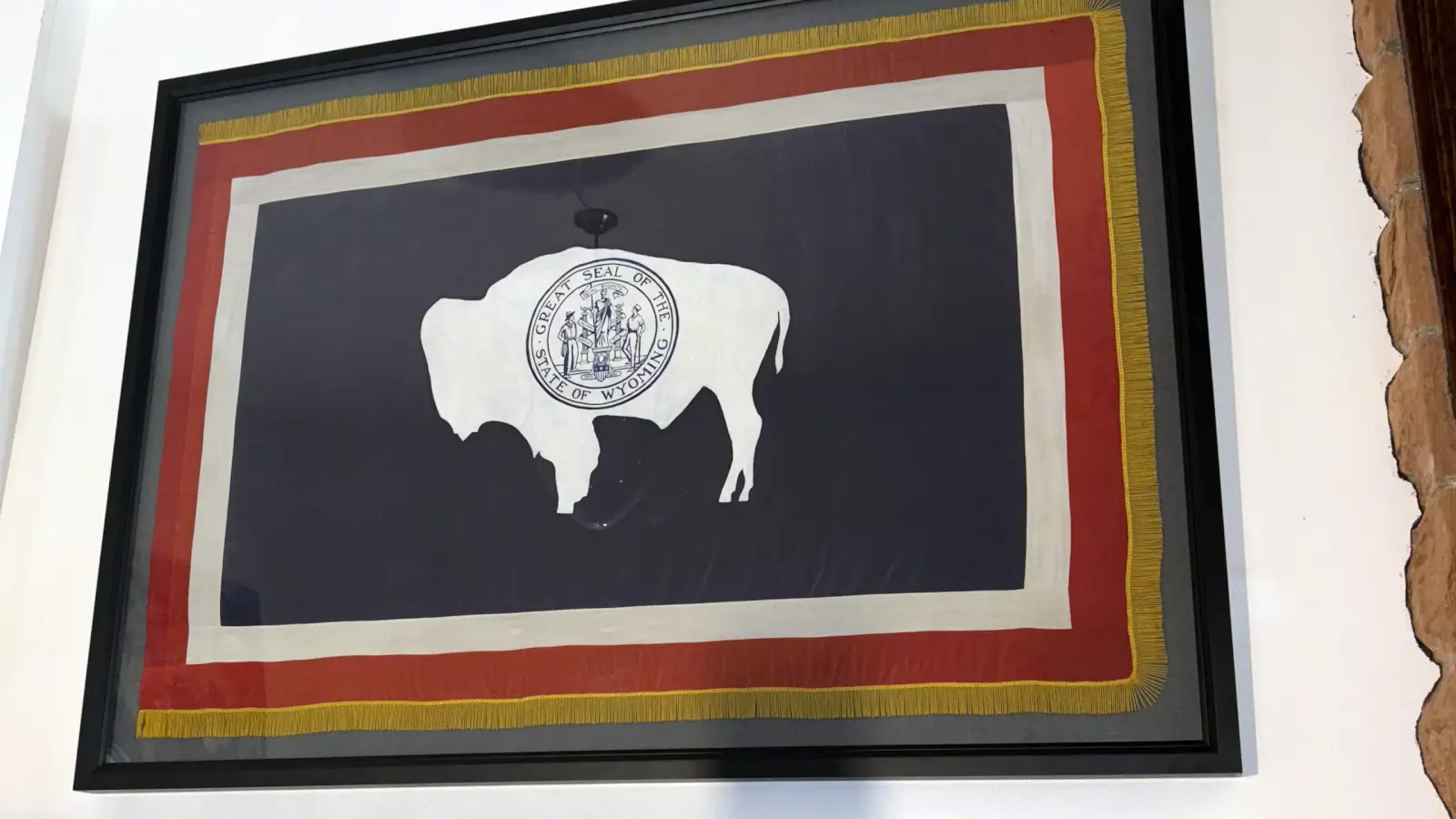
The Wyoming state flag is the only state flag in the U.S. that features a bison, and it was designed by a woman from Buffalo in 1916.
Verna Keays was a recent graduate of the Art Institute of Chicago living in her hometown of Buffalo when she entered the contest sponsored by the state chapter of the Daughters of the American Revolution. Wyoming, which became a state in 1890, three years before Verna was born, still did not have a flag 26 years later, and the DAR set a goal to have one adopted in the 1917 legislative session. The prize for the winning entry was $20.
Keays’ entry includes a lot of symbolism and remains one of the best-loved state flags among fans of vexillology.
Who Designed the Wyoming State Flag?
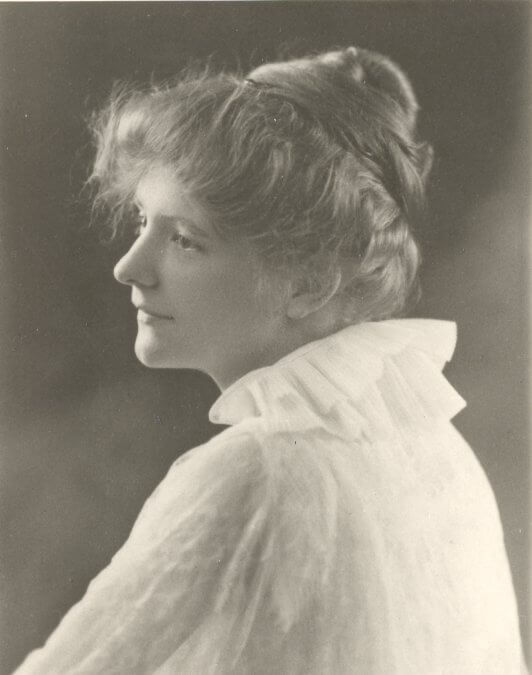
Verna Keays was born on August 16, 1893, in Buffalo. Her father, Billy Keays, had moved to Buffalo in 1884 and reportedly was an attorney. Her mother, Estella, was the daughter of an attorney.
Verna’s mother placed a high value on education, and Verna completed high school in Ohio before being accepted to the Art Institute of Chicago.
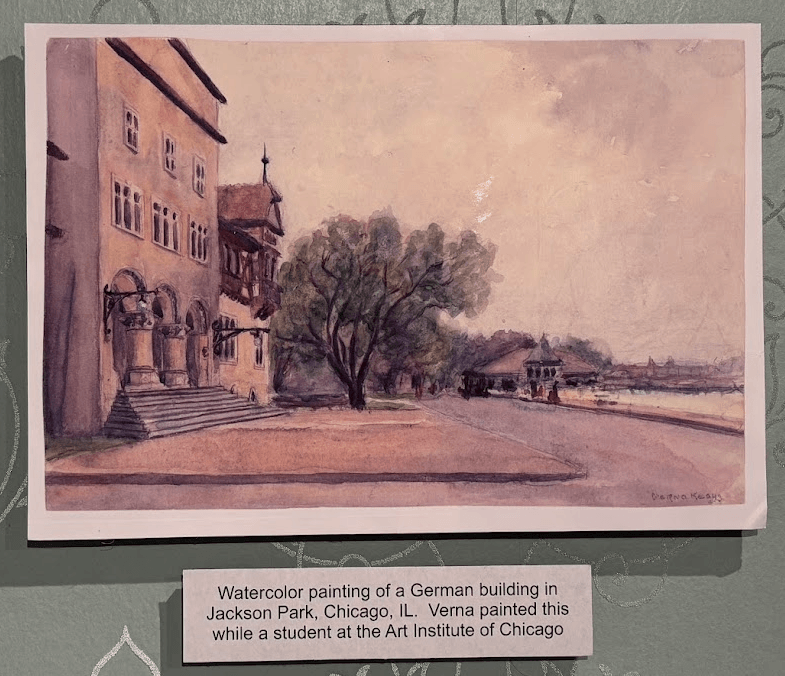
After graduation in 1916, she returned to Buffalo, heartbroken that the man she loved was exposed to mustard gas while fighting in Europe in World War I and therefore would not be able to marry her.
Verna’s father encouraged her to enter the DAR contest later that year.
She later said the image for the Wyoming flag came to her in her sleep as a complete concept.
The 1916 DAR Flag Design Competition
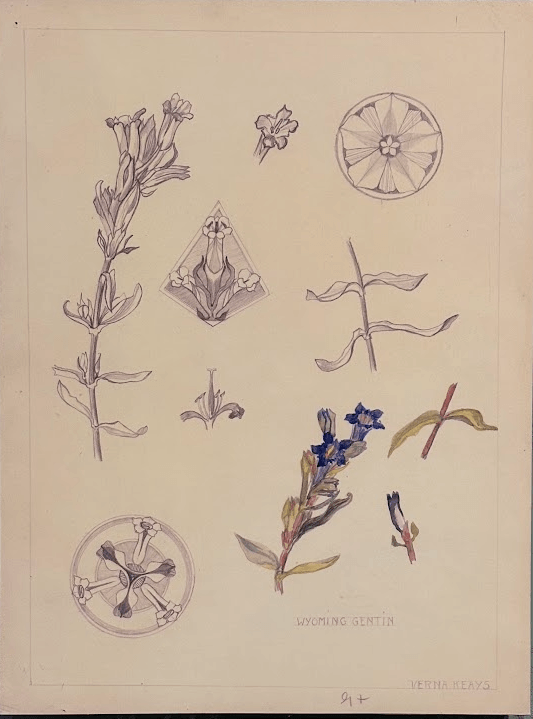
Wyoming had been a state for 26 years by 1916 and still was without an official flag. Dr. Grace Raymond Hebard, a professor of political economy in her second year of a two-year term as state regent for the Wyoming chapter of the Daughters of the American Revolution, felt it was important to have a state flag. One practical purpose was for members of the Wyoming National Guide to carry if sent into battle, either along the border with Mexico or in the first World War.
The contest was advertised in state newspapers beginning in September of 1916 with a one-month entry period. There were 37 entries, including one from Hebard. DAR members selected Verna’s as the winning entry for its deep symbolism and beautiful design.
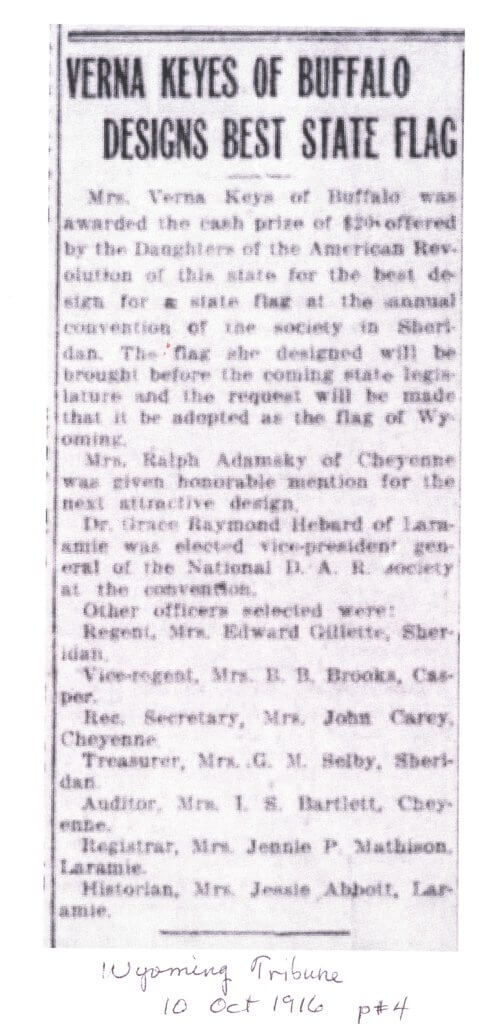
Turning the Bison
Once Verna’s entry was chosen as the winner, Hebard promoted the design and lobbied legislators and other educators. She prepared a formal written description of the flag that was included in the bill introduced by State Senator William W. Daley.
But Hebard made a change to Verna’s design that still sparks conversation. Verna had the bison facing away from the hoist (flag pole).
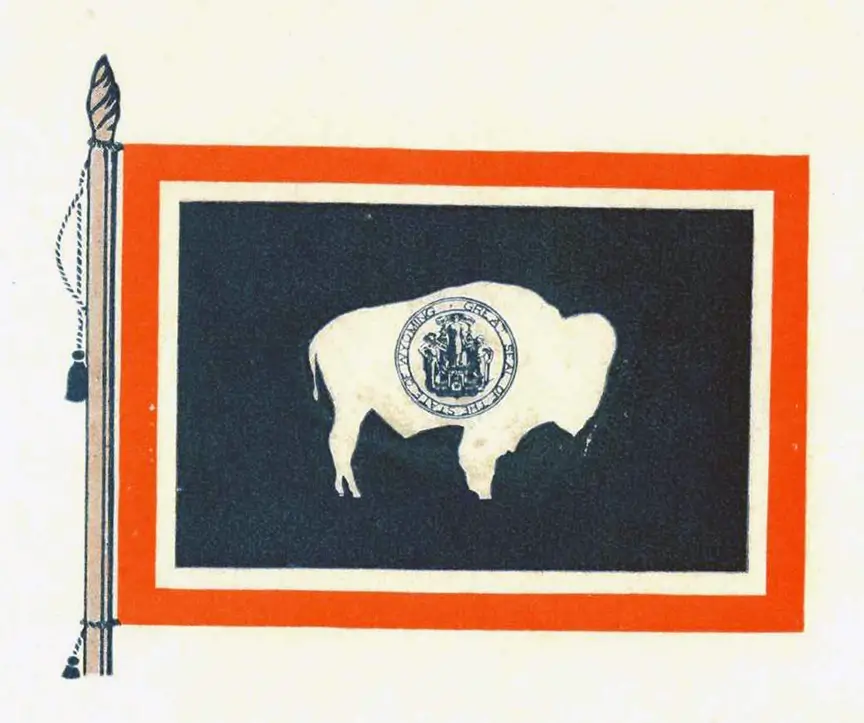
“My reasoning on this was that the bison had once roamed freely over the plains of Wyoming, and I thought he should fly so on the flag,” Verna wrote. “Dr. Hebard did not agree with this and thought it would be better design and balance to have the bison facing the staff. “Consequently, when the first flags were manufactured she had them done the latter way, and so they have remained.”
Reportedly, Hebard thought having the bison face the staff would show its strength against a stiff wind.
Correspondence between the women indicate that perhaps they were not of the same mind on the change, and that the final outcome may have been influenced by the fact Hebard was a 55-year-old professional woman while Verna was 23 and just starting out. Verna wrote in 1949: “It was Dr. Hebard’s wish and it was done, and few questioned or crossed her.”
Whether intentional or not, Hebard’s official description of the flag did not designate the direction of the bison. It also did not designate which state seal should appear or where it should appear on the bison. The bison’s silhouette also was not codified, leading various manufacturers to produce different-looking bison.
Making it Official
During Senate debate over the state flag in early 1917, each political party attempted to replace the bison with a different animal. Some of the suggestions were in jest – a donkey by the Democrats and an elephant by the Republicans. Moose, antelope and bighorn sheep also were reportedly discussed, but the bison remained.
And on January 31, 1917, Governor Robert D. Carey signed the state flag bill into law.
1911 Flag Proposal
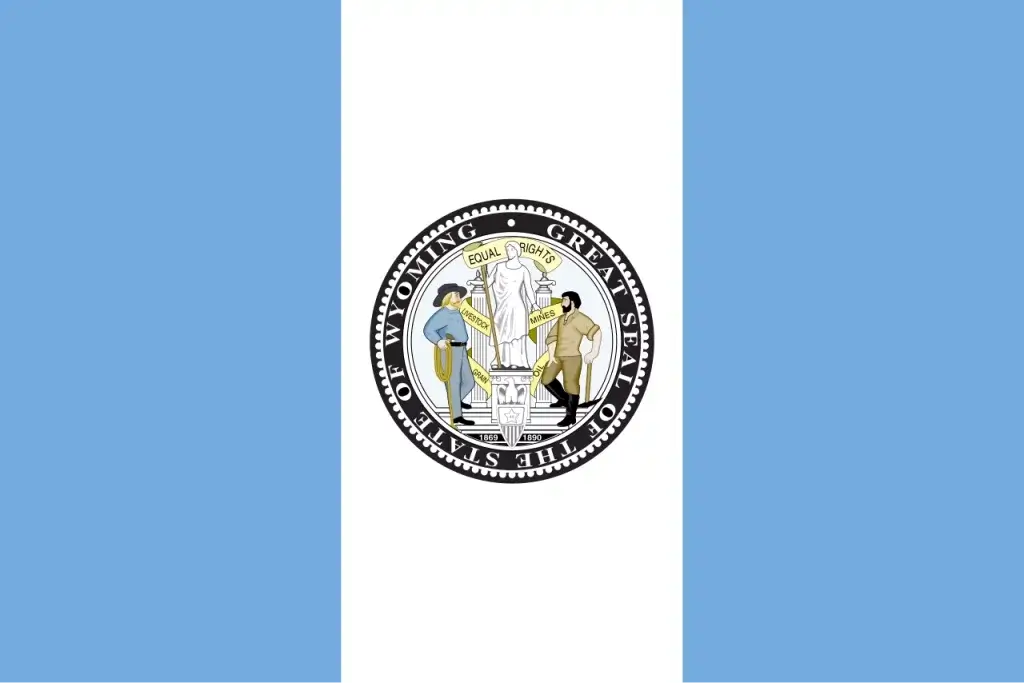
The Wyoming House had considered a flag proposal in February of 1911 but did not pass the bill. Introduced by Rep. Pep Frederick, the bill designated the flag would consist of: “three alternate stripes of pale blue and white bunting, silk, or other appropriate material; said stripes to be equal width and parallel with the staff, the white stripe being the middle one and to have in its longitudinal center a correct outline or color reproduction of the STATE SEAL whose diameter shall be five-sixth’s… of the width of the white stripe; the proportion of the flag being a width of two-thirds… its length.”
Verna Keays’ Flag: Symbolism and Design Meaning
Verna Keays’ flag design is rich with symbolism, reflecting Wyoming’s identity, heritage, and landscape. The white field represents purity and uprightness. The red border symbolizes the Native Americans and the blood of pioneers who settled the land. The blue signifies the beautiful Wyoming skies, distant mountains, fidelity, justice, and virility. Central to the design is the bison, the ‘Monarch of the Plains,’ which bears the Great Seal of the State of Wyoming, a nod to the western custom of branding livestock.
| Fact | Answer |
| Official Colors | What are the official colors of the Wyoming state flag? The Wyoming state flag features the colors red, white and blue – same as the flag for the United States of America – with the Great Seal of the State of Wyoming branded on a white buffalo. |
| Color Symbolism | What is the meaning of the colors on the Wyoming state flag? While utilizing red, white and blue, the colors of the Wyoming state flag have different symbolism than the U.S. flag. The red border around the outside of the flag symbolizes Native Americans and also the blood of pioneers who lose their lives. The white represents purity and uprightness. The blue is the color of the sky and the mountains, and also symbolizes fidelity, justice and virility. The bison, the monarch of the Plains, represents the local fauna. |
| Nickname | What is the nickname of the Wyoming state flag? The Bison Flag. Wyoming is the only state to have the bison on its flag. Interestingly, while there are specifications regarding the flag, none specifically designate what the bison silhouette should look like. |
| History | What is the history of the Wyoming state flag? The flag was designed by Buffalo resident Verna Keays in 1916 for a contest sponsored by the Daughters of the American Revolution. It was adopted by state officials in 1917. |
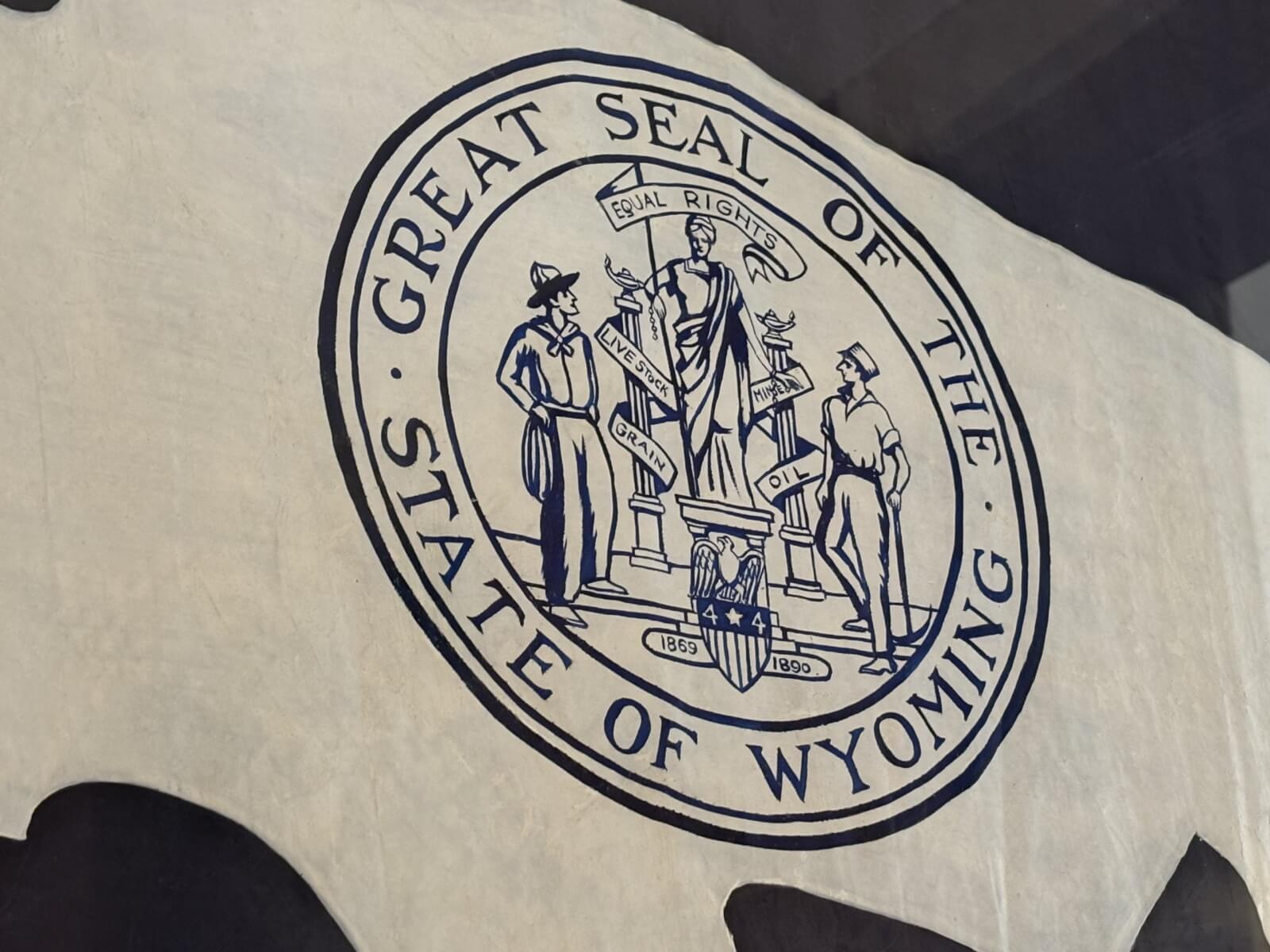
| Great Seal | What is the Great Seal of Wyoming on the state flag? At the center of the state flag – “branded” into the bison – is the Great Seal of the State of Wyoming, which was adopted in 1893 and revised in 1921. The draped woman in the center holds a staff from which flows a banner bearing the words, “Equal Rights,” symbolizing the political status women have always enjoyed in Wyoming. Male figures typify the livestock and mining industries of the state. A number 44 on a star signifies that Wyoming was the 44th state admitted to the Union. On top of the pillars rest lamps from which burn the Light of Knowledge. Scrolls encircling the two pillars bear the words Oil, Mines, Livestock, and Grain – four of Wyoming’s major industries. The seal being branded into the bison is an homage to the western custom of branding livestock. |
Symbolism in Verna Keays’ Design
Verna Keays had in mind from the very beginning the meanings for the colors of the Wyoming state flag.
She had her mother write a note accompanying her entry that explained:
— The great seal of the state of Wyoming serves as the “heart” of the flag, representing the truly Western custom of branding.
— The bison was once known as the “Monarch of the Plains.”
— Red was for the Native Americans, “who knew and loved our country long before any of us here; also, the blood of the pioneers who gave their lives in reclaiming the soil.”
— White was for “purity and uprightness.”
— Blue for beautiful Wyoming skies and distant mountains, as well as fidelity, justice and virility.
— And finally, red, white and blue together represent the “greatest flag in all the world, the Stars and Stripes of the United States of America.”
The chosen by Verna work in harmony to create a cohesive design vision. This composition serves as a memorable state symbol, masterfully capturing Wyoming’s essence, heritage, and the openness of its landscape in a single, unified image.
Verna Keays’ Legacy and Recognition
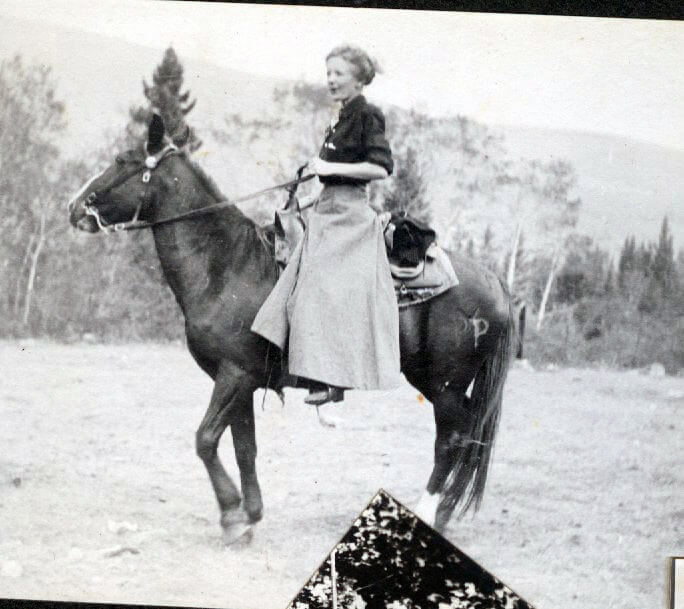
While Verna Keays’ design of the Wyoming flag endures, she left a lasting legacy in Johnson County while also using her position as the flag designer to have an impact throughout the state. Not long after her winning design entry, Verna served as a Wyoming legislative clerk, in 1917 and 1919.
She eventually met her husband, Arthur Keyes, and they were married on June 1, 1921. He was a World War I veteran who had a homestead in Kaycee. The couple moved to Montana and then Casper, where Arthur ran a business. They had two daughters. Verna also had a business, working with the George Lauterer Company of Chicago to produce the state flags. A silk one was produced for the University of Wyoming in 1926, and Verna set a goal to have the flag in every school in the state.
She moved back to Buffalo for a time in 1931. There, she organized the first Girl Scout troop for the area and led scouting activities in the Bighorn Mountains. Verna would appear in parades and at rodeos, telling the story of the flag around the state. She died on October 31, 1982, at the age of 89, and is buried in Buffalo.
Exploring Verna Keays’ Buffalo
Visitors to Johnson County today can learn more about Verna Keays Keyes and the Wyoming state flag at various locations, most notably the Jim Gatchell Memorial Museum in downtown Buffalo. The Johnson County Library also has a display featuring Verna, who is buried in historic Willow Grove Cemetery.
Buffalo Museums and Verna Keays Heritage Sites
Buffalo is rich in American West history, offering visitors several key sites to explore the enduring legacy of Verna Keays, the designer of the Wyoming state flag. Major institutions like the Jim Gatchell Memorial Museum preserve collections related to her life and the history of the flag of Wyoming. These heritage sites allow for a deeper connection to the Wyoming flag’s creation and Keays’ role in local cultural life.
Jim Gatchell Memorial Museum
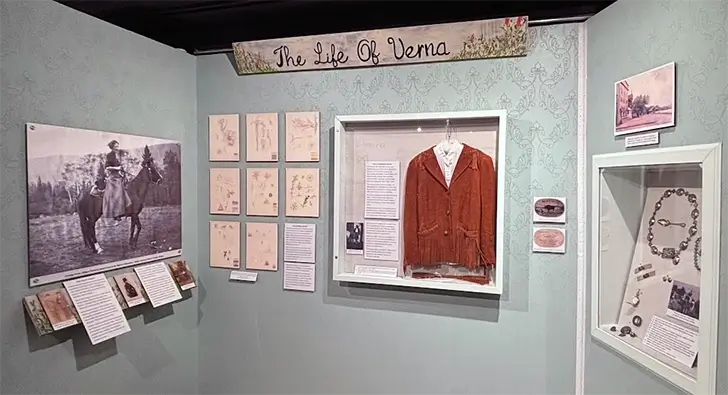
The award-winning Jim Gatchell Memorial Museum not only has an outstanding collection of items telling the story of early Wyoming history, but it also has some unique items related to Verna Keays Keyes. In 2017, on the 100th anniversary of the adoption of the state flag, the museum put on permanent exhibit one of the first six state flags produced. That painted flag had been presented to Verna when she was honored by the state Legislature in 1945.
The Gatchell also displays a designed logo for the city of Buffalo that Verna produced. The family of Verna Keays Keyes recently donated 33 additional items to the museum. Those items include: five pieces of Keyes’ sterling silver flatware; a 14K gold pocket watch that once belonged to Keyes’ mother, Estella; and a small-engraved brooch with a photo of Keyes’ uncle Pulaski Ferguson before he disappeared in the West.
Johnson County Library
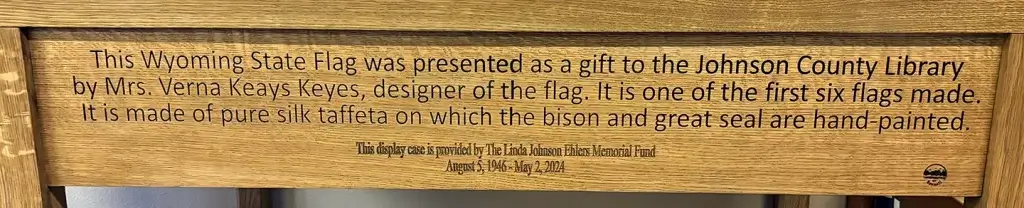
The Johnson County Library also has a display devoted to the life of Verna Keays Keyes and a hand-painted silk taffeta flag that Verna presented to the library. The library’s history room offers incredible resources for researchers related to Verna’s life and the adoption of the state flag.
Willow Grove Cemetery
Verna Keays Keyes is buried in Willow Grove Cemetery, alongside her husband, her parents and other historic Johnson County figures such as Nate Champion, Nick Ray, Joe LeFors, and Red Angus. Keyes’ tombstone reads “Designer of Wyoming State Flag.”